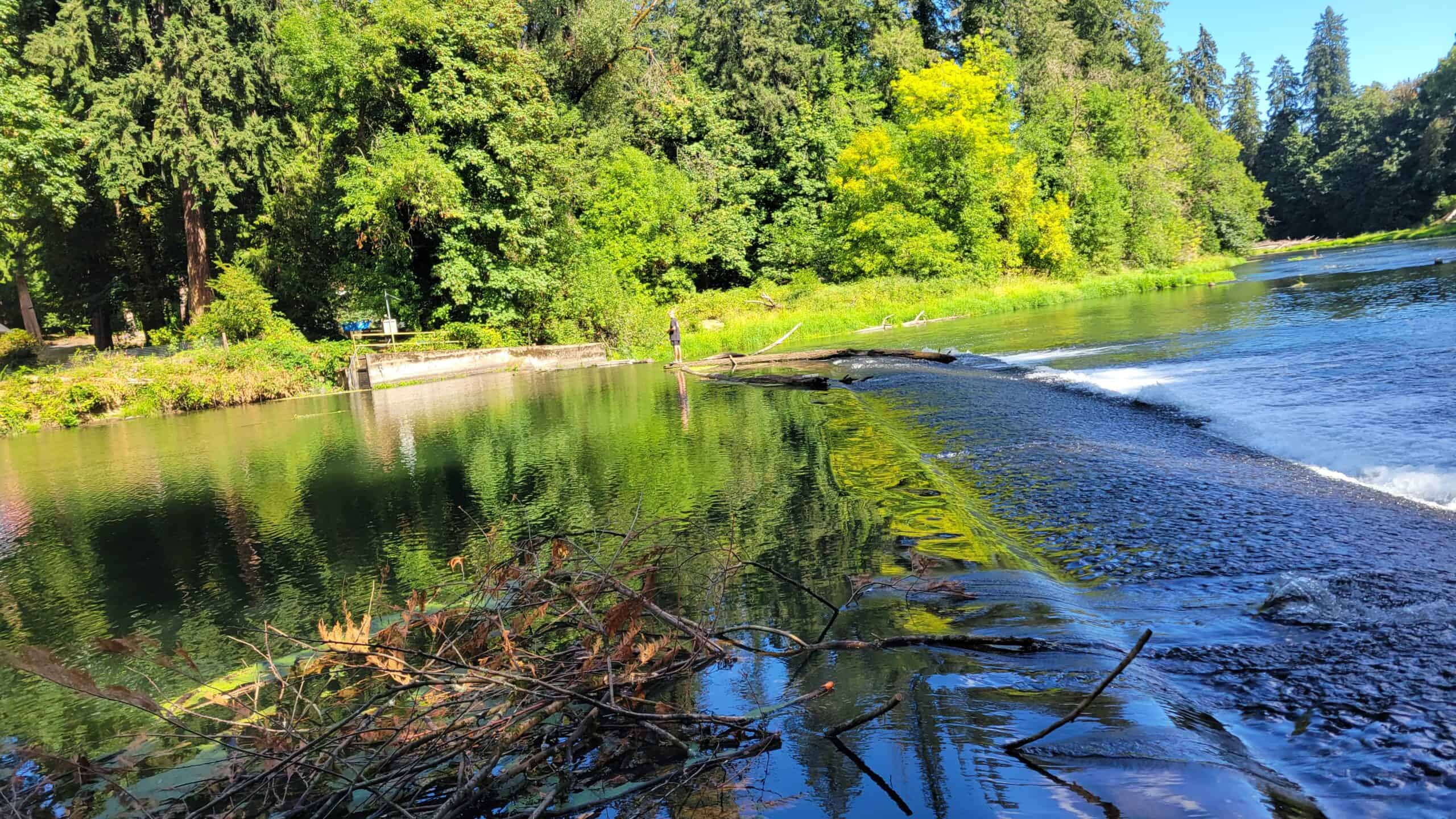
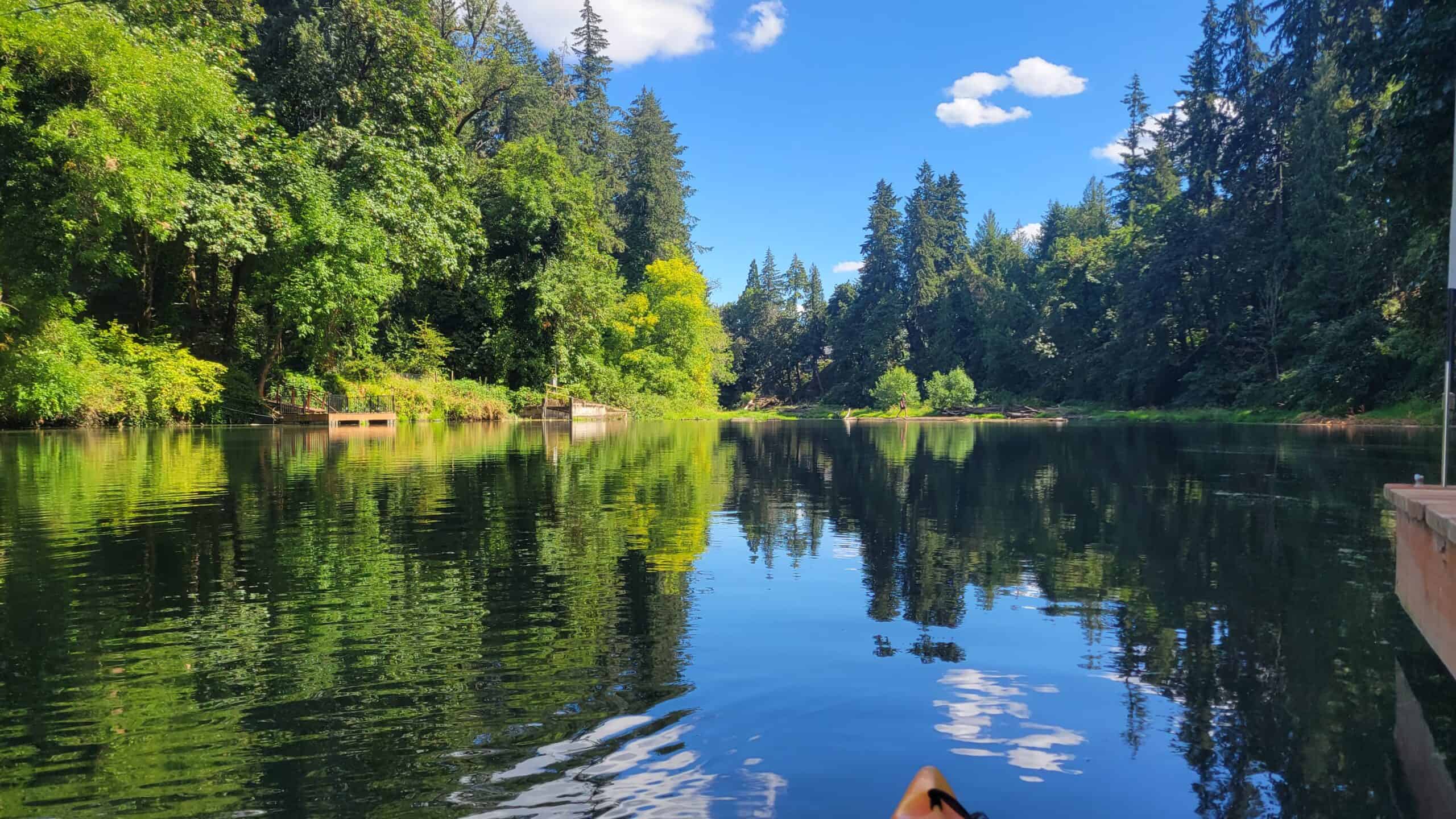
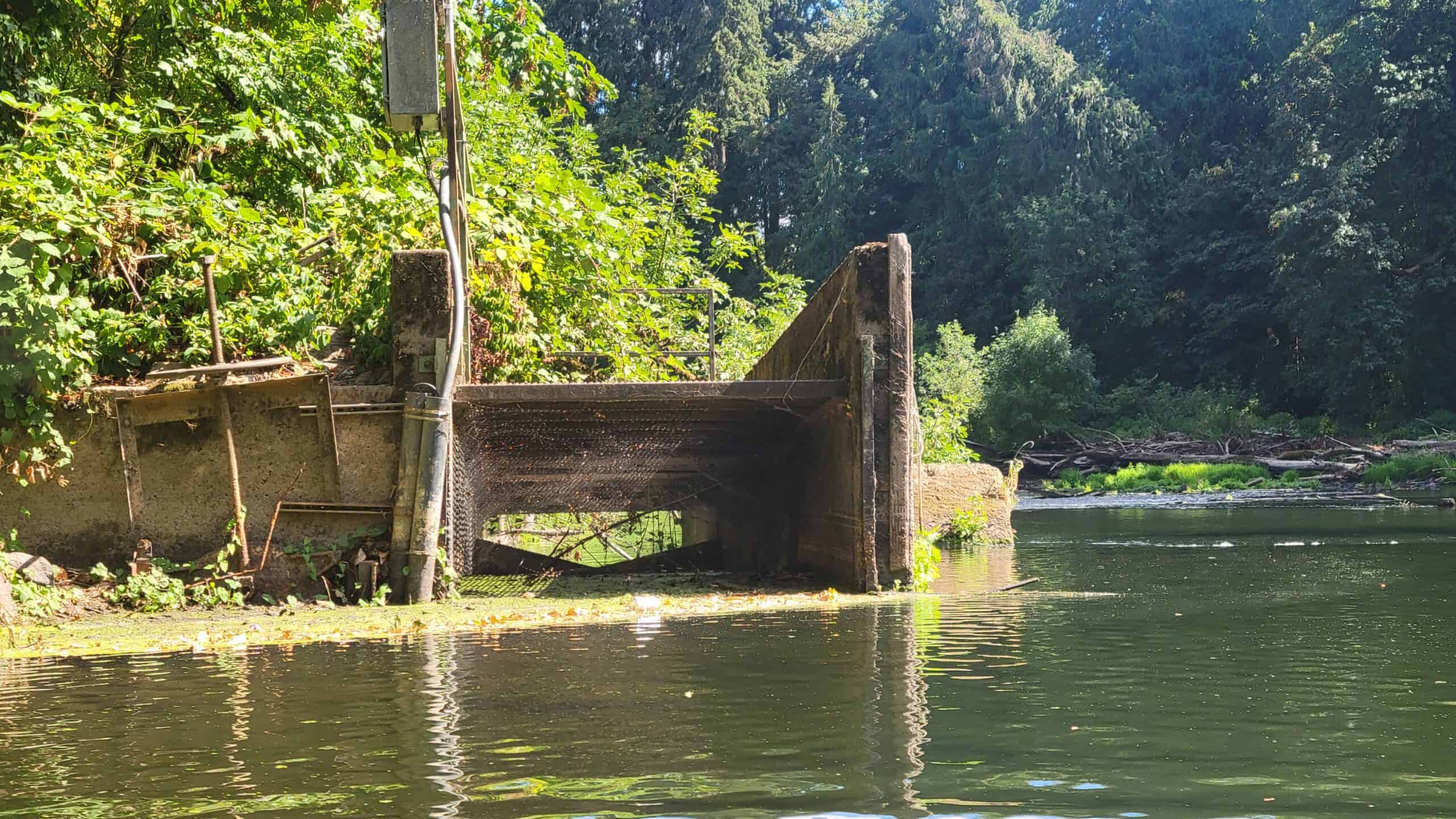
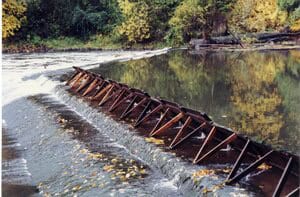
The dam was built in 1882 to raise the level of the Tualatin River diverting more water into the Lake Oswego Canal. The dam is difficult to see from the upriver side and has no warning signs. The dam is dangerous and impassable.
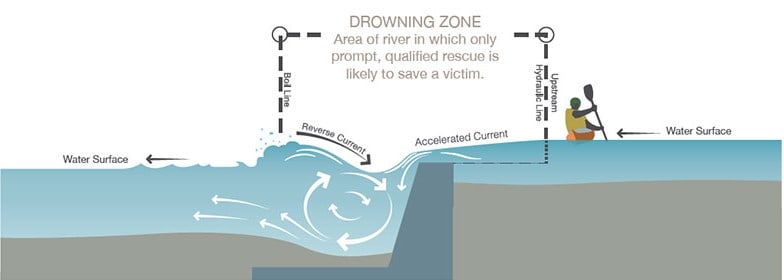
The Oregon Department of Fish & Wildlife has identified the dam as a high priority fish passage barrier (#25 out of 605). The dam has an old fish ladder. Low head dams like this dam are known as “Drowning Machines” because they create a reverse hydraulic current at the downriver base of the dam which can trap people under water.
The Tualatin River Navigation and Manufacturing Company envisioned a two canal system to carry goods from the Tualatin Valley to the Willamette River. The first canal from the Tualatin River (River Mile 6.7) to the west end of Sucker Lake (called Waluga meaning “Wild Swan” by the Clackamas). Sucker Lake is now known as Oswego Lake. The second canal with locks from Oswego Lake to the Willamette River was never built.
In 1882, the renamed Oregon Iron & Steel Company built a 4.5 foot diversion dam to increase the flow of water into the canal. In 1889, the dam height was increased to 10 feet via the addition of a concrete riser and flash-boards. This led to a considerable amount of farmland flooding in the fall. In 1897 a judge ruled for the farmers and ordered the dam be abandoned. However, the case remained tied up in the courts due to appeals. On August 16, 1906 someone (unknown) dynamited a 20 foot wide hole in the diversion dam. The existing diversion dam is a remnant of this original dam.